Looking for the good in today
For Teachers, Parents & Grandparents
A simple way to keep the conversation going
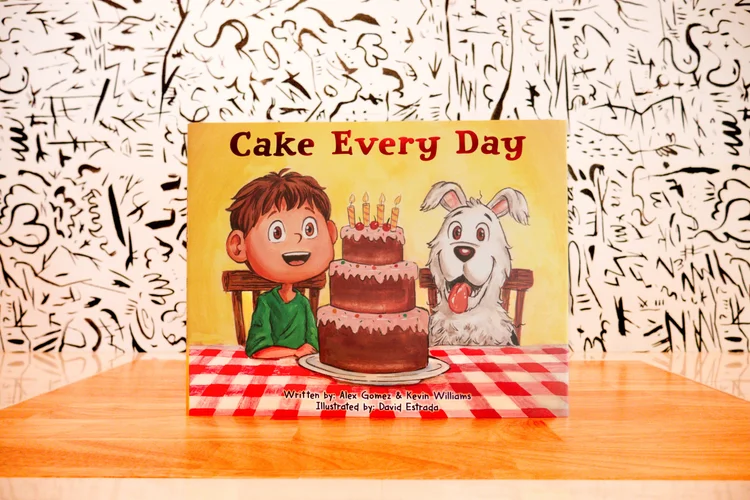
Cake Every Day is the true story of eight-year-old Alex Gomez, who grew up in Mexico and wanted to buy a birthday cake for his little sister. When he didn’t make enough pesos selling gum at the mercado, something unexpected followed him home. The heart of the book is a practice anyone can use:
Choose to look for the joy of life all around you.
Sometimes the good that shows up isn’t the good you planned for.
Discussion Questions
Use these after reading, or return to them later. You don’t need to cover every question.
Looking at the story
- What was Alex hoping to bring home for his sister?
- How did he feel when he only had six coins?
- What unexpected thing followed him home?
- Why do you think he decided the dog could be “cake”?
Seeing the good in today
- Have you ever wanted something and gotten something different instead? What happened?
- What’s one small good thing you noticed today?
- Alex says cake every day isn’t hard to find. Where do you think he looks for it?
About people, family, and place
- Who was Alex thinking about while he was selling gum?
- How did his family react when he brought the dog home?
- Alex’s day happens in a Mexican mercado, with pesos, a rooster, and café con leche from his abuela. What details stood out to you about where he grew up?
- The book says loving people is more important than the pesos in your pocket. What does that mean to you?
For older kids or deeper talks
- Alex kept trying even when most people said no. What helped him keep going?
- How is the cake Alex brought home different from the cake he first wanted?
- What does “you can have cake every day” mean to you, wherever you are?
For Teachers
The story naturally supports social-emotional learning conversations, especially self-awareness, self-management, and relationship skills. It also offers an authentic window into a child’s everyday life in Mexico — the mercado, the language, the family routines — without turning the book into a lesson about immigration. It works well as a read-aloud for ages 4–8 and can spark short discussions about gratitude, perspective, and what we choose to notice.